Why Most Rental Property Deals Fail—And How Pricing Discipline Builds Wealth
A seller wants $1.2M; the buyer’s model says $900k. How disciplined pricing decides whether a rental portfolio ever scales.
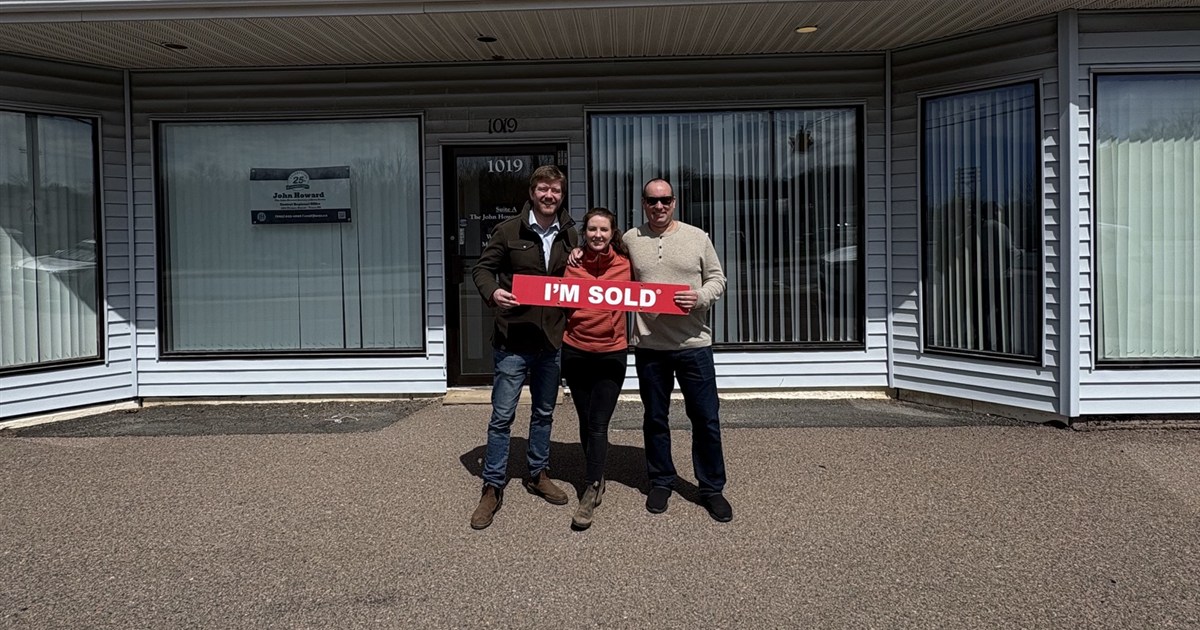
Most rental property investors never buy a second property. The main reason is pricing.
In today’s market, buyers and sellers are so far apart on valuation that deals simply don’t happen. A seller wants $1.2M; a buyer’s financial model says $900k makes sense. The gap is insurmountable. The property hangs on the market for months, both parties walk away, and the investor’s portfolio never scales.
The investors who do scale are the ones willing to walk away from bad deals and structure their financing around the math, not the emotion. This post walks through how to price rental property correctly, navigate the tax shocks most buyers miss, and use debt strategically to build equity for the next property.
The Role of Financial Planning in Rental Property Valuation
Why DCF Analysis Matters
Rental property is an investment, not a home. That means it needs to cash flow and appreciate over time. The way to know if it will is a discounted cash flow (DCF) analysis.
A DCF starts with a simple premise: project the property’s net income (rent minus expenses) for the tenor of your investment — for me, it’s 20 years — estimate a terminal value (what it’s worth at year 20), and discount both back to today’s dollars. If the result is less than the asking price, the deal doesn’t work. If it’s higher, you may have found a deal. There’s other ways to think about this like what’s the return after leverage or a hurdle rate. I model that up to, but we’ll keep it simple here.
If you’re not a financial modelling wizard, the simplest way to think about this is the cap rate, which is Net Operating Income / Purchase Price. That number is essentially your pre-debt average annual rate of return. The trick with that is to scrutinize the line items as sellers may under-report expenses to increase value and then you also have to project future cost increases.
This discipline is what separates investors who scale from those who overpay and wonder why their portfolio isn’t growing.
Sensitivity Analysis: What Happens When You’re Wrong?
The hardest part of a DCF isn’t the math — it’s the assumptions. What if rents don’t rise as much as you forecast? What if operating costs inflate faster? What if you need to hold the property longer to hit your return target?
That’s where sensitivity analysis comes in. One approach is testing a deal against three scenarios: optimistic (rent growth 5% annually), base case (3%), pessimistic (0.5%). If the base case fails to work, the deal doesn’t work. If it only works in the optimistic scenario, that’s the kind of deal disciplined investors walk away from.
This discipline sounds ruthless, but it’s what builds portfolios. Every “no” protects your capital for the right opportunity.
The Property Tax Shock: The Hidden Deal-Killer
Most investors factor in the purchase price, mortgage, and operating costs. Then the property tax bill arrives and everything breaks.
How Property Tax Works When You Buy
When you purchase a rental property, the municipality reassesses it — usually at or near the sale price. In Nova Scotia, there’s no cap on commercial property tax increases, so the jump can be dramatic.
Here’s a real example:
| Metric | Amount |
|---|---|
| Previous owner bought | 5 years ago for $500,000 |
| You buy | Today for $1,000,000 |
| New assessment | ~$1,000,000 |
| Your annual property tax | Nearly double the previous owner’s bill |
Most buyers don’t factor this into the deal. They assume the property tax is static. Then the first bill arrives, and the monthly cash flow they modeled evaporates.
Building This Into Your DCF
The fix is simple: the property tax increase belongs in the model as an operating cost at purchase, estimated conservatively.
If the property was assessed at $500k and taxed at $5,000/year (1%), and the purchase price is $1M, a conservative model assumes the annual property tax is closer to $10,000. Even if it takes the municipality a year to reassess, a cash flow model that budgets for the full jump won’t be caught off guard.
This single line item can kill a deal — or save you from one.
Managing HST on Commercial Properties
If the building is commercial (or mixed-use), HST may be owing on the sale. The key: as the buyer, you don’t write a cheque at closing. Instead, you register for HST, and the HST remits directly to the Canada Revenue Agency (CRA), offset by an input tax credit. A real estate lawyer can structure this as “buyer remits” at closing.
On an ongoing basis, you’ll collect 14% HST on every commercial rent payment from your tenants. A common practice is setting that money aside monthly in a separate savings account (many banks allow tax-earmarked accounts) and remitting it once a year to CRA. Skipping that step means facing a large tax bill — plus CRA penalties — when remittance comes due.
Closing Costs: The Spreadsheet Most Buyers Miss
Before you even close, there are costs:
- Lawyer fees (title search, deed registration)
- Appraisal
- Inspection and environmental report
- Land transfer tax (jurisdiction-dependent)
- Possibly a business tax or survey
These can add up to $15,000–$30,000 depending on the property and location. They belong in the total acquisition cost, backed into the DCF. If the numbers don’t work after closing costs are included, the deal doesn’t work.
Using Debt Strategically: The HELOC Down Payment & Leverage
Once you have one property, equity is your tool to scale. There are four ways to build equity:
- Buy below market value and refinance higher (the “diamond in the rough” — rare, hard to repeat)
- Add value through renovation (capital-intensive; takes time)
- Raise rents (slow, limited by market)
- Wait for the mortgage to pay down (takes years)
Most investors mix these. But for the down payment on property #2, the strategy many scaling investors use is leveraging equity from property #1.
The HELOC as a Down Payment Tool
A home equity line of credit (HELOC) against your primary residence is one of the lowest-cost sources of debt available. You borrow against your home’s equity, and the interest you pay is generally not tax-deductible for personal use.
However: if you use that HELOC as a down payment on a rental property that generates income, the interest on that HELOC becomes tax-deductible. This is the foundation of the Smith Maneuver strategy — using borrowed money to invest, so the interest expense reduces your taxable income.
Example:
- Your home is worth $600k; mortgage is $300k. You have $300k in equity.
- You open a HELOC for $100k at 6% annual interest.
- You use that $100k as a down payment on a rental property.
- The $6,000/year in HELOC interest is now tax-deductible because it’s used to finance rental income.
- At a 43% marginal tax rate, that $6,000 deduction saves you $2,580/year in taxes.
The trade-off is clear: you’re taking on more debt, which increases risk. But if you’re comfortable with that leverage and you’re disciplined about servicing the debt, a HELOC down payment compounds your return while using the tax system to reduce the cost of that leverage.
Why Patience Pays Off
Finding the right rental property takes time. You’ll see dozens of deals before one makes sense on the numbers. That’s not a failure — it’s discipline.
The first property took a lot of time and patience to find. But once you own it, the path to the second property becomes clearer: refinance into the equity you’ve built, use it as a down payment, and repeat. Each iteration gets easier because you have less to prove (a track record, existing rental income, equity history).
The wealth building happens passively — the bank’s money and time do the work — but only if you started with the right deal.
Frequently asked questions
What is a DCF analysis in real estate?
A DCF (discounted cash flow) analysis projects a property’s future net rental income, discounts it back to today’s dollars, and compares the result to the asking price. If the DCF value exceeds the price, the deal makes sense. It’s the most rigorous way to avoid overpaying.
Why does property tax increase so much when you buy in Nova Scotia?
When you purchase a property, the municipality reassesses it based on the sale price. In Nova Scotia, there’s no cap on commercial property tax increases. If the previous owner bought at $500k and you buy at $1M, your tax bill can nearly double overnight.
Can I deduct HELOC interest on my mortgage?
Not for your personal home. But if you borrow via HELOC and use that money to invest in a rental property that generates income, the interest becomes tax-deductible. This is why a HELOC can be a tax-efficient down payment tool.
What happens to HST when I buy a commercial property?
As the buyer, you don’t pay HST at closing. Instead, you register for HST, and the tax is remitted directly to CRA with an input tax credit offsetting it. A real estate lawyer can structure this as “buyer remits” at closing.
How much should I budget for closing costs on a rental property?
Closing costs (lawyer, appraisal, inspection, land transfer tax) typically range from $15,000–$30,000. Including these in the total acquisition cost — and in the DCF analysis — shows the full picture before committing to a deal.
What’s Next
The next post tackles the ongoing tax infrastructure: how HST collection and remittance works on commercial rents, why investors with rental income get taxed differently than you might expect, and how management fees can reshape your tax picture.
After that, the third post covers CCA depreciation and the share-sale trap — the largest deduction available on a rental building, and the purchase structure that can quietly cut it in half.
See your own numbers. Investments, debt, retirement, education, estate — one view, free.
Get started free →This article is for educational purposes only and does not constitute financial, investment, tax, or legal advice. The illustrative examples use simplifying assumptions that may not reflect any individual’s circumstances. Consider speaking with a qualified professional about your own situation.